Large Language Models as Home Security Guard: A Personal Notification Framework with LLM Agent
April 16, 2024
This article introduces a proactive home security framework leveraging Large Language Models (LLMs) to analyze video feeds, detect suspicious activities, and engage in real-time communication with homeowners, revolutionizing traditional surveillance systems.
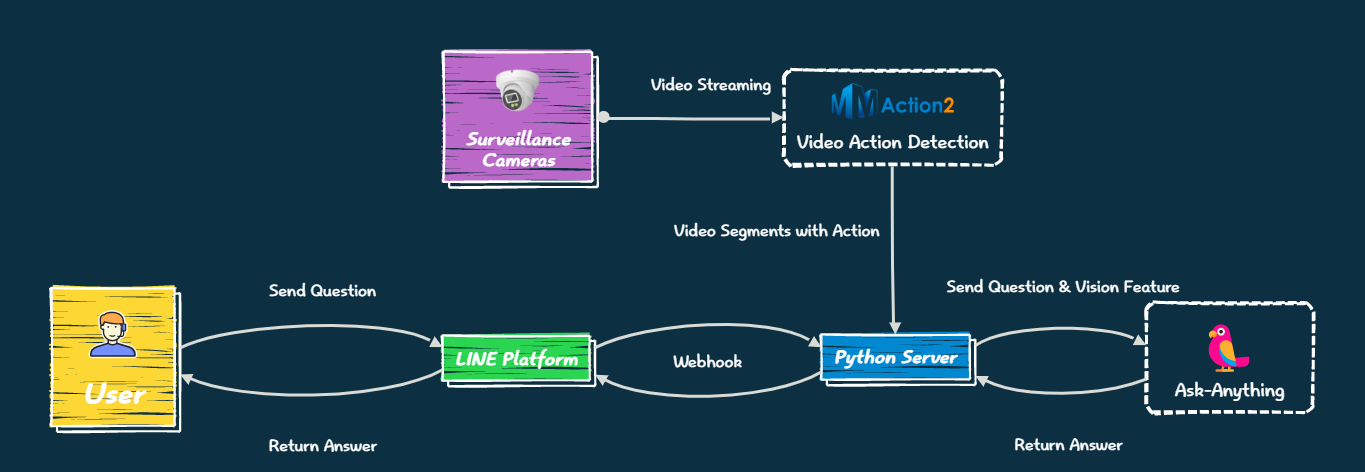
Fig. 1: Block diagram of the proposed framework.
In today’s interconnected world, ensuring the safety and security of our homes is paramount. Traditional security systems often rely on passive surveillance, leaving homeowners unaware of potential threats until it is too late. Motivated by the need for proactive security measures, this article introduces a novel approach that leverages Large Language Models (LLMs) to serve as virtual home security guards.
Introduction
With advancements in artificial intelligence and natural language processing, LLMs have emerged as powerful tools capable of understanding and generating human-like text. By integrating LLMs into home security systems, we can revolutionize the way we monitor and respond to potential security threats. This article presents a framework wherein LLMs analyze video feeds from home surveillance cameras, interpret human activities, and engage in real-time communication with homeowners to provide personalized security alerts.
Proposed Model
The proposed model integrates LLMs into the existing home security infrastructure to create a proactive notification system. The block diagram is shown in Fig. 1. The framework operates as follows:
Video Understanding: Home surveillance cameras capture video footage of the surrounding environment, and video segments are then extracted by an action detection model, e.g., [1]. These video segments, together with a prompt, are fed into a Multi-modal Large Language Model (MLLM), such as [2], which analyzes the scene to understand the video content — i.e., abnormal or unexpected human activities — and answers the user’s questions based on the given prompt. The prompt fed into the LLM is as follows:
prompt = "Give you a video of surveillance which is captured situation at the door of your home, please use one to two sentences to step-by-step describe the behavior of person in the video in the format of sentence of using subject plus verb to express. Do not imagine any contents that are NOT in the video."Real-time Communication: Upon identifying suspicious activity, the LLM initiates real-time bidirectional communication with the homeowner via a chat server. Users receive instant notifications on their devices, alerting them to potential security threats.
Personalized Interaction: Homeowners can interact with the LLM to gather more information about the detected activity. They can ask questions such as the number of individuals involved, their actions, and physical descriptions. The LLM provides detailed responses based on its analysis of the video content.
Proactive Alerting: In addition to reactive notifications, the LLM can proactively notify users of potential security risks based on predefined criteria. For example, it can alert homeowners if unfamiliar individuals approach their doorstep or linger in the vicinity for an extended period.
Results
Fig. 2: A case demonstrating an unfamiliar individual approaching the doorstep.
Preliminary testing of the LLM-powered home security framework has shown promising results. The system successfully identifies and alerts homeowners to various types of suspicious activities, including unauthorized entry attempts, loitering, and package theft. Users appreciate the real-time notifications and the ability to engage in dialogue with the LLM to obtain additional information. Note that the “!init” command is used for offline demonstration purposes; in the real-time setting, the LLM receives visual information directly from the video stream.
Conclusions and Future Work
In conclusion, the integration of LLMs into home security systems offers a proactive approach to safeguarding residential properties. By leveraging advanced AI capabilities, homeowners can receive timely notifications and interact with their virtual security guard to gain insights into potential threats. However, there is still room for improvement and future work in several areas:
Enhanced Accuracy: Continued refinement of the LLM’s video understanding capabilities to improve accuracy in detecting and interpreting human activities.
Expanded Functionality: Integration of additional sensors and data sources to enhance the LLM’s situational awareness and response capabilities.
Scalability: Scaling the framework to accommodate larger residential properties and networked surveillance systems.
In summary, the integration of LLMs as virtual home security guards represents a significant advancement in residential security technology. With further research and development, this framework has the potential to redefine the way we protect our homes and provide peace of mind to homeowners worldwide.
References
[1] MMAction2 Contributors. OpenMMLab’s Next Generation Video Understanding Toolbox and Benchmark. ECCV Workshop, 2022.
[2] Kunchang Li, Yinan He, Yi Wang, Yizhuo Li, Wenhai Wang, Ping Luo, Yali Wang, Limin Wang, and Yu Qiao. 2023e. Videochat: Chat-centric video understanding. arXiv preprint arXiv:2305.06355.